


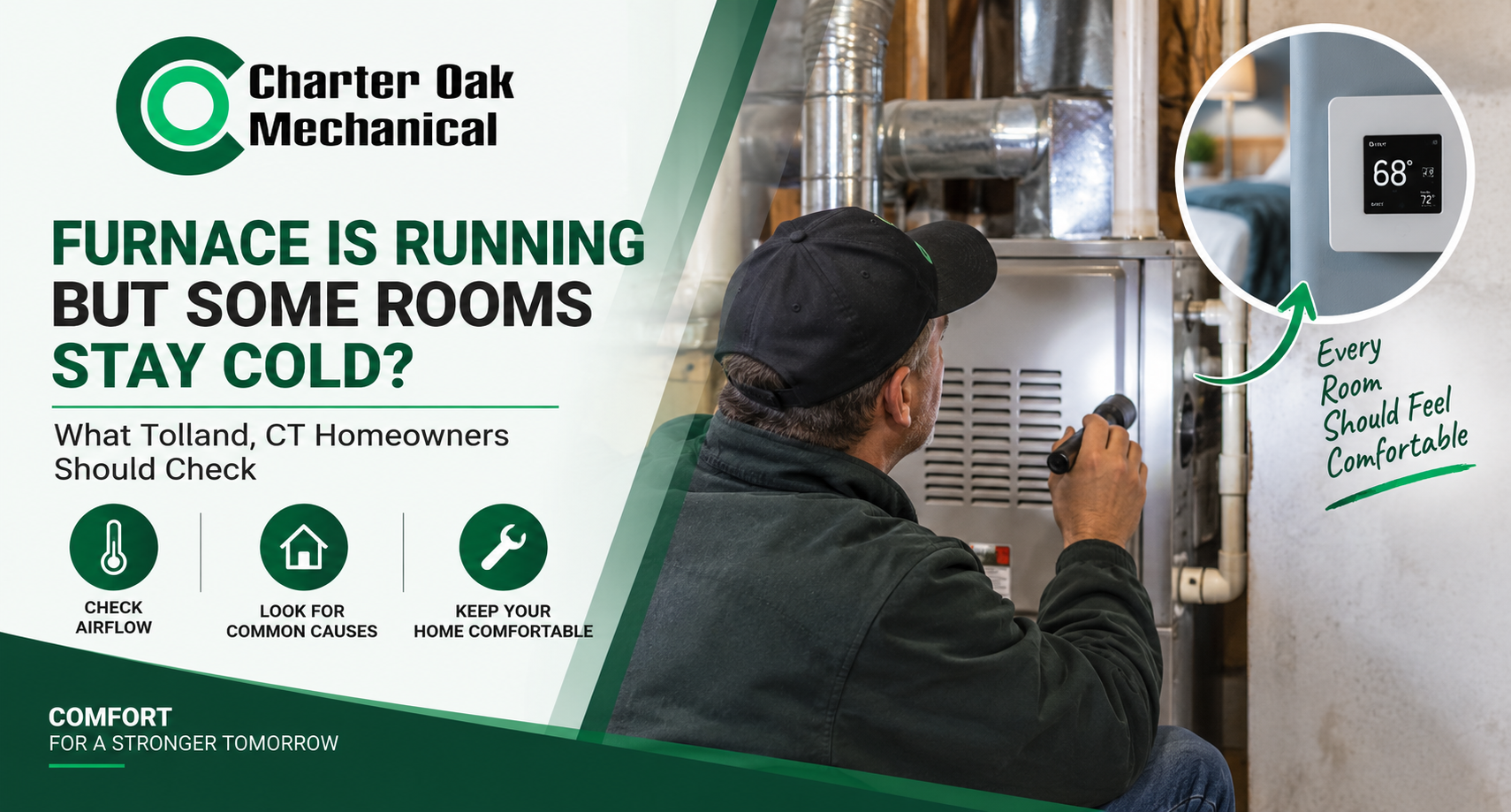
Your furnace is running, warm air is coming from the vents, and the thermostat seems normal. Yet one bedroom feels comfortable while another room stays noticeably colder. This type of uneven heating can be frustrating, especially during a cold Connecticut winter.
A cold room does not automatically mean your furnace is failing. Heating problems can come from airflow restrictions, insulation differences, thermostat location, ductwork, or even the way individual rooms are used. Understanding the possible causes can help Tolland homeowners know what to observe before deciding what needs professional attention.
Start With the Simplest Check: The Vents
Before assuming there is a major heating problem, look at the supply and return vents in the colder rooms. Furniture, rugs, curtains, storage boxes, or other household items can sometimes block airflow without anyone noticing.
Also check whether adjustable registers are open. A room cannot receive enough warm air if the supply register is closed or obstructed.
Avoid placing furniture directly over or in front of return vents as well. Your heating system needs to circulate air throughout the home, and restricted airflow can affect comfort.
Pay Attention to the Furnace Filter
A dirty or heavily clogged air filter can restrict airflow through an HVAC system. When airflow is reduced, the system may have difficulty distributing conditioned air effectively throughout the home.
Homeowners should check the filter according to the furnace manufacturer’s recommendations and replace it when appropriate. The correct filter type and replacement schedule can vary depending on the system, household conditions, pets, and other factors.
If uneven heating continues despite a clean filter and open vents, the problem may be somewhere else.
Consider Which Rooms Are Coldest
The location of the uncomfortable rooms can provide useful clues.
Are they all upstairs? Are they located above a garage? Are they on the side of the house that receives less sunlight? Do they have more exterior walls or larger windows?
These details matter because the furnace is only one part of home comfort. Heat can escape more quickly from certain rooms due to air leakage, insulation differences, windows, doors, or the design of the home.
Professionals such as Charter Oak Mechanical can evaluate heating-system performance when the problem appears to go beyond simple vent or filter checks.
Your Thermostat Only Measures One Location
A thermostat does not know the temperature in every room unless the HVAC setup includes additional compatible sensors or zoning controls.
If your thermostat is located in a warm central hallway, for example, that area may reach the selected temperature before a distant bedroom becomes comfortable. The thermostat then signals the heating system based on the temperature it detects at its own location.
This can make one part of the house feel comfortable while another remains cooler.
Avoid trying to solve the problem simply by raising the thermostat significantly. That may make already-warm rooms uncomfortable without addressing the reason for the temperature difference.
Could the Ductwork Be Involved?
Warm air has to travel from the heating equipment through ductwork before reaching individual rooms. Problems along that path can sometimes contribute to uneven temperatures.
Damaged, disconnected, poorly designed, or inadequately insulated ducts may affect how much heated air reaches certain areas. Ductwork can also be difficult to inspect because much of it may be hidden inside walls, ceilings, basements, or attics.
Because accessing or modifying HVAC ductwork can involve safety and system-performance considerations, extensive investigation is better left to a qualified HVAC professional.
Don’t Assume a Bigger Furnace Is the Answer
When some rooms remain cold, homeowners may assume they need a larger heating system. Bigger, however, does not automatically mean better.
Heating equipment should be appropriately selected for the home’s requirements. Home size, layout, insulation, windows, climate, and other factors can influence heating needs.
If an aging or unsuitable system is contributing to comfort problems, homeowners researching affordable furnace installation in Tolland can discuss system sizing and household heating needs with a qualified professional before choosing replacement equipment.
Remember That Not Every Comfort Problem Comes From the Furnace
Homes contain multiple mechanical systems, and it is useful to distinguish their jobs.
A furnace generally provides space heating, while a water heater supplies hot water for showers, faucets, and appliances. A cold bedroom and a shower that suddenly runs out of hot water are therefore different symptoms that usually require different troubleshooting.
For example, information about the best water heater installation in South Windsor CT is relevant when evaluating domestic hot-water needs, but it should not be confused with diagnosing uneven room temperatures.
Look for Changes From Previous Winters
One of the most useful questions is: Has this room always been colder?
If a particular bedroom has been slightly cooler for years, the issue may relate to the home’s layout, insulation, or airflow design. If it suddenly became much colder this winter, something may have changed.
Pay attention to new noises, weaker airflow, unusual furnace cycling, rising heating costs, or temperature differences that are becoming more noticeable.
When Should You Call a Professional?
Professional evaluation makes sense when multiple rooms remain cold despite open vents and a suitable clean filter, airflow seems unusually weak, the furnace repeatedly turns on and off, or the temperature difference has suddenly become significant.
If you smell gas or suspect carbon monoxide, leave the affected area and follow emergency guidance from your utility, emergency services, and carbon-monoxide alarm instructions rather than attempting HVAC troubleshooting yourself.
Final Thoughts
When a furnace is running but certain rooms stay cold, replacing the furnace should not be the first assumption. Start by checking vents, filters, room location, thermostat conditions, and noticeable changes in airflow.
Uneven heating can have several possible causes, and sometimes more than one factor is involved. Understanding where and when the problem occurs gives Tolland homeowners useful information to share with an HVAC professional and helps ensure the actual cause is addressed instead of simply turning the thermostat higher.